

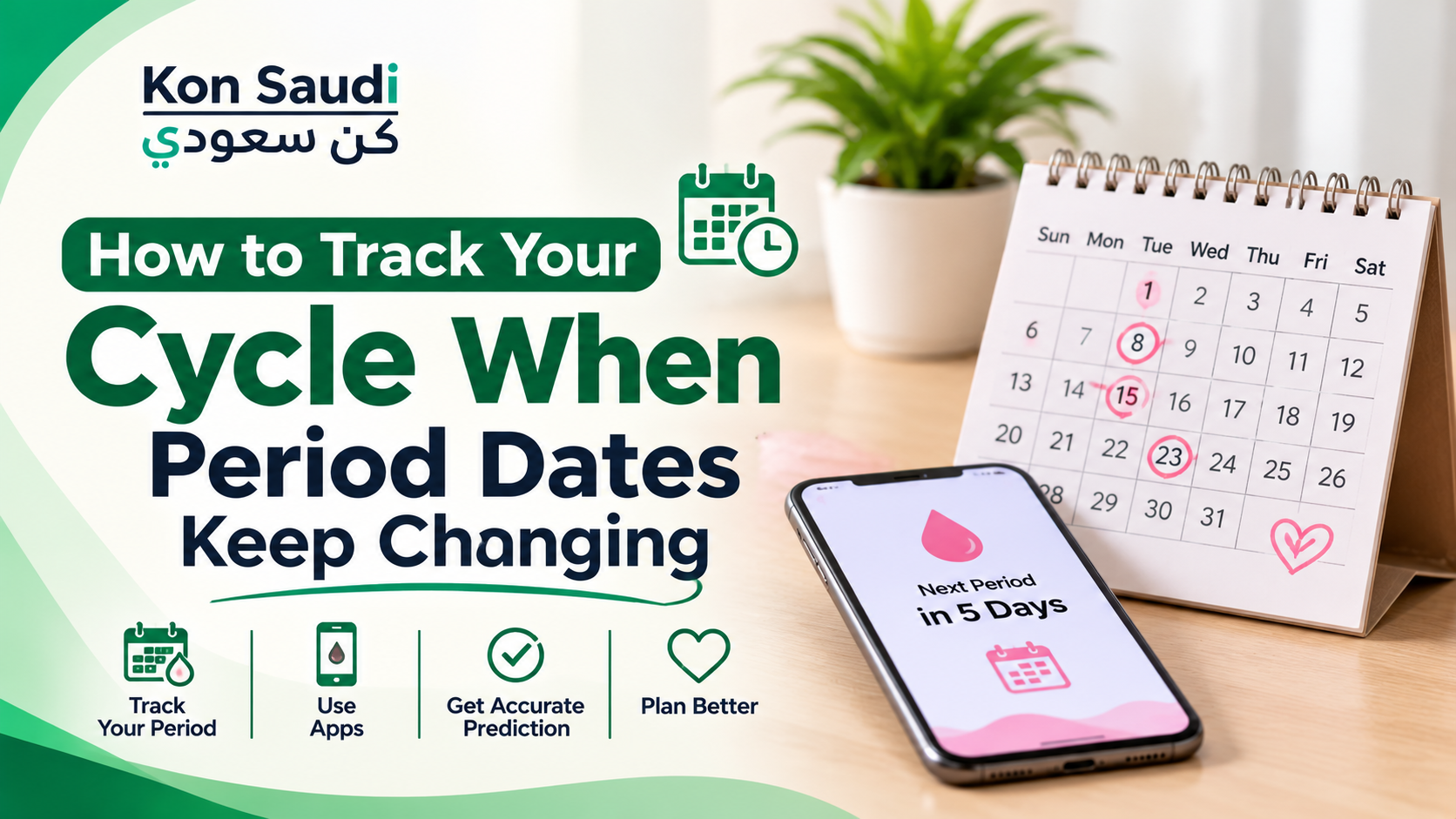
Tracking your menstrual cycle can become confusing when your period does not arrive on the same date every month. Some months it may start earlier, while in others it may be delayed by several days. This makes it difficult to predict your next period, plan daily activities, or understand changes in your body.
However, an irregular period calendar does not mean cycle tracking is impossible. By recording a few important details and observing patterns over several months, you can develop a better understanding of your menstrual cycle. How to track your menstrual cycle becomes easier when you maintain consistent records and use helpful resources such as our Ovulation and Period Calculator to estimate your upcoming period and possible ovulation dates. The goal is not to predict every period perfectly but to recognize changes and identify patterns over time.
How Menstrual Cycle Tracking Works
Your menstrual cycle begins on the first day of menstrual bleeding and continues until the day before your next period starts. The first day of one period is considered Day 1 of a new cycle.
A menstrual cycle does not have to follow the same calendar dates every month. Its length can naturally vary, and factors such as stress, illness, hormonal changes, and lifestyle habits may affect its timing.
Instead of expecting your period on a fixed date, record the first day of every period. This helps you calculate the length of each cycle and understand how much it changes from month to month.
Record Your Period Start and End Dates
The easiest way to track changing period dates is to maintain a simple menstrual calendar. You can use a notebook, spreadsheet, or period-tracking application.
Record the following information whenever your period begins:
Start date: The first day of menstrual bleeding
End date: The day bleeding stops
Flow level: Whether bleeding is light, moderate, or heavy
Symptoms: Cramps, headaches, bloating, or breast tenderness
Other changes: Mood changes, fatigue, or unusual symptoms
These details help you look beyond the actual period date. For example, you may notice that certain symptoms appear a few days before your period, even when the starting date changes.
Calculate Your Cycle Length Each Month
Once you have recorded your period dates, calculate the number of days between the first day of one period and the first day of the next.
For example:
Period | First day |
January period | January 5 |
February period | February 3 |
March period | March 6 |
These dates represent cycle lengths of approximately 29 and 31 days. Although the starting dates are different, the cycle lengths are relatively close.
Continue recording this information for several months. Looking at multiple cycles gives you a more useful picture than relying on just one month's dates.
Use Symptoms to Understand Your Cycle
Period dates are only one part of menstrual cycle tracking. Physical and emotional symptoms can also provide useful information.
Some people experience changes around ovulation, which is the stage when an ovary releases an egg. Possible signs include changes in cervical mucus, mild pelvic discomfort, and changes in sexual desire.
Other symptoms may include:
Breast tenderness before menstruation
Abdominal cramps
Bloating or water retention
Changes in mood or energy
Acne or skin changes
These signs vary from person to person. They can help you recognize recurring patterns, but symptoms alone cannot confirm exactly when ovulation occurs. If you record dates using the Islamic calendar, our Hijri to Gregorian Calendar Converter can help convert them into Gregorian dates for easier record keeping.
Understand What Can Cause Changing Period Dates
Several factors can influence menstrual cycle timing. Stress, sudden weight changes, intense exercise, poor sleep, and illness may affect hormonal activity.
Other possible causes include thyroid conditions, polycystic ovary syndrome (PCOS), and other hormonal or reproductive health concerns. Starting, stopping, or changing hormonal contraception can also affect bleeding patterns.
Pregnancy may be another reason for a missed period if pregnancy is possible. A pregnancy test can help clarify the situation.
If your period dates keep changing, avoid assuming that every variation has the same cause. Tracking your cycle can provide useful information, but it cannot diagnose an underlying condition.
When Should You Speak to a Healthcare Professional?
Occasional changes in period timing can happen, but persistent or significant irregularities deserve attention. According to the NHS guide to irregular periods, changes in menstrual patterns should be discussed with a healthcare professional when they become persistent or unusual.
Consider speaking with a healthcare professional if:
Your periods repeatedly occur less than 21 days or more than 35 days apart.
You miss three periods in a row and are not pregnant.
Your bleeding lasts longer than seven days.
You experience very heavy bleeding or severe menstrual pain.
Your cycle changes suddenly after previously being regular.
You experience bleeding between periods or after sexual activity.
Seek urgent medical care if you experience severe pain, fainting, or very heavy bleeding, especially if pregnancy is possible.
Make Cycle Tracking a Monthly Habit
The most useful approach is to track your cycle consistently rather than focusing only on predicting the next period. Record dates, bleeding patterns, symptoms, and relevant lifestyle changes.
After three to six months, review your records to see whether your cycle follows a recognizable pattern or continues to vary significantly. Bring these records to a healthcare appointment if you have concerns.
Remember that menstrual cycle tracking is a tool for understanding your body, not a substitute for medical advice. With consistent records and attention to unusual changes, you can make cycle tracking more useful even when your period dates keep changing.